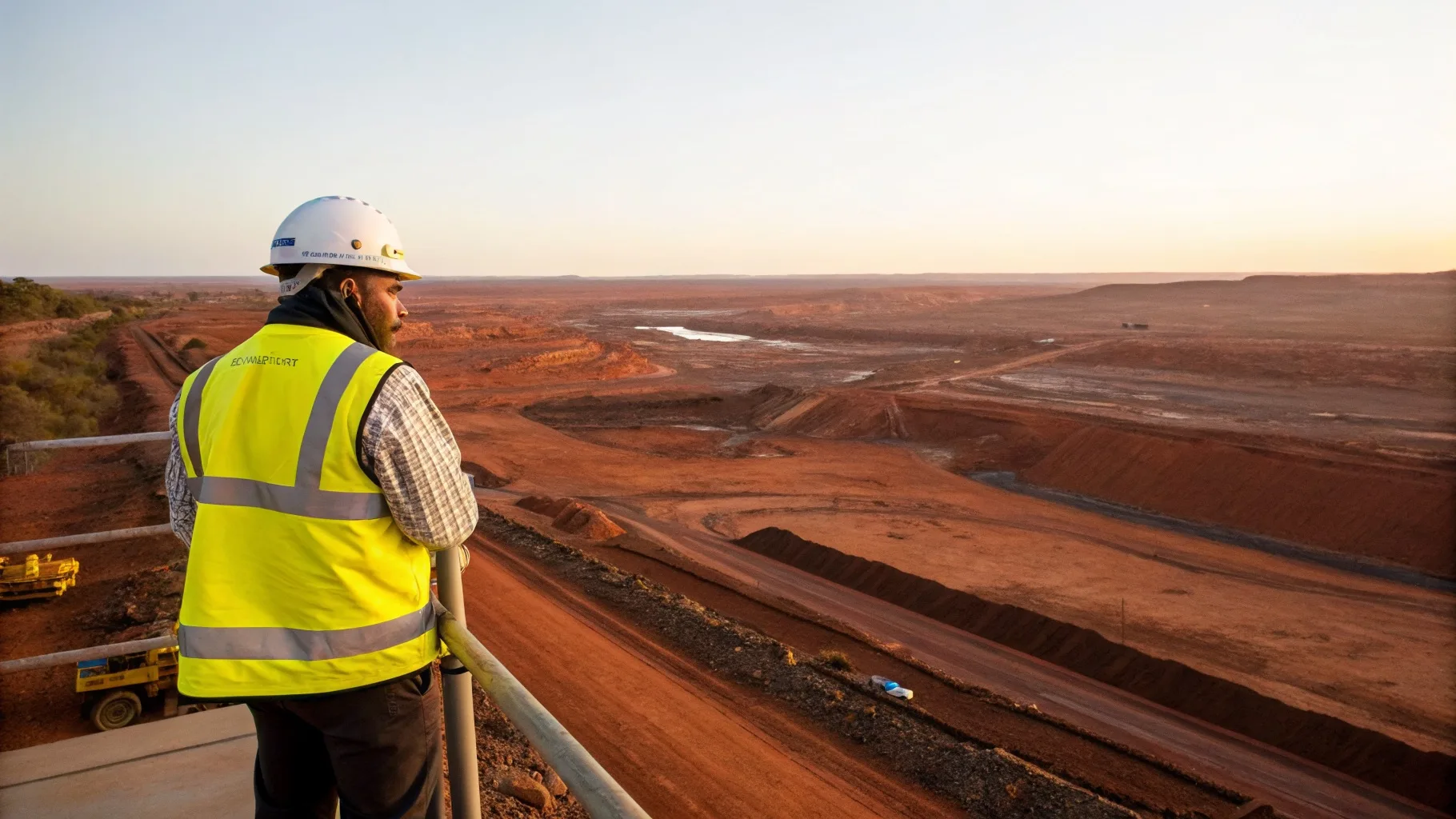
Construction experience is one of the best backgrounds for transitioning into mining. You already understand heavy equipment, safety culture, and working in demanding environments. The jump isn't as big as you might think.
Here's exactly how to make the transition — what transfers directly, what you'll need to add, and how to position yourself.
Why Construction Workers Transition Well
Skills That Transfer Directly
- Equipment operation — Excavators, loaders, dozers work similarly
- Safety culture — SWMS, toolbox talks, hazard awareness
- Physical fitness — Used to demanding outdoor work
- Shift work — Familiar with long hours and early starts
- Team environment — Working with crews under pressure
What Mining Adds
- Higher pay — Typically 30-50% more than equivalent construction roles
- Structured rosters — Know when you're working months ahead
- Accommodation and meals — Provided on FIFO sites
- Career progression — Clear pathways to senior roles
A civil construction excavator operator on $80-90K can realistically earn $140-170K+ doing similar work in mining. Same skills, different industry, much better pay.
Step 1: Assess Your Current Position
Equipment Experience That Counts
List everything you've operated with estimated hours:
- Excavators — What sizes? Track your hours
- Front end loaders — Wheel loaders of various sizes
- Dozers — Even small D6s count as experience
- Dump trucks — Articulated and rigid body
- Graders, rollers, scrapers — All valuable
Certifications You Already Have
These all transfer:
- White Card (Construction Induction)
- HR/HC truck licence
- Forklift licence
- Working at Heights
- Confined Space
- First Aid/CPR
Step 2: Get Mining-Specific Tickets
Essential Additions
White Card (WA) or Standard 11 (QLD coal)
- What it is — White Card (CPCCWHS1001) is a construction induction. It does not by itself grant mine-site access. Standard 11 is Queensland coal — it does not transfer to WA
- How long — White Card is typically one day; Standard 11 is a full-day QLD coal induction
- Cost — White Card about $80–$150; Standard 11 more if you need the QLD coal pathway
- Priority — Get the ticket the state actually uses. WA sites still add their own induction after you are hired
Haul Truck Ticket (RDT)
- What it is — Mining-specific haul truck certification
- Even if — You've driven trucks in construction, you need this
- Cost — $1,500-$3,500
- Priority — Essential for most operator roles
Your Existing Tickets Help
Your construction equipment tickets (excavator, loader, dozer) are valid in mining, but:
- Sites will VOC (Verify Competency) you on their specific machines
- Mining equipment is often larger — be honest about your experience level
- Your tickets get you considered; site VOC gets you operating
Step 3: Reframe Your Experience
Your resume needs to speak "mining language" while highlighting your transferable experience.
Key Reframes
- "Civil construction" becomes "civil/earthmoving operations"
- "Building site" becomes "project site"
- "Foreman" becomes "Leading Hand/Supervisor"
- "Pits and footings" becomes "excavation to grade"
Highlight Mining-Relevant Experience
- Large-scale earthworks — Road building, dam construction, bulk excavation
- Safety focus — JSAs, toolbox talks, near-miss reporting
- Equipment hours — Document everything you've operated
- Team leadership — If you've led crews, emphasise this
- Working away from home — Any camp-based or remote project experience
If you've worked on major infrastructure — roads, rail, pipelines, civil works — this experience is highly valued. These projects have mining-similar safety cultures and scale.
Step 4: Target Entry Points
Best Starting Roles for Construction Workers
Haul Truck Operator
- Highest volume of jobs
- Clear training pathway
- Your truck experience helps
- Gateway to other equipment
Excavator Operator (Entry/Intermediate)
- Direct skill transfer from construction
- Start on smaller machines, progress to larger
- Your hours count — document them
Service/Support Roles
- Water cart operator
- Light vehicle driver
- General operator (multi-skilled)
- Good entry points to prove yourself
Consider Mining Services
Not all mining work happens for mining companies directly:
- Drilling contractors — Epiroc, Sandvik contractors
- Mining services companies — Thiess, Macmahon, Byrnecut
- Civil contractors on mine sites — NRW, MACA, Decmil
These companies do construction-style work on mining sites — perfect transition roles.
Step 5: Apply Strategically
Register with Mining Labour Hire
- WorkPac, Programmed, Chandler Macleod, Hays
- Complete profiles mentioning construction background
- Emphasise willingness to learn and start at appropriate level
Direct Applications
- Apply to trainee and entry-level positions
- Don't oversell your experience — mining equipment is often bigger
- Mention your construction hours as foundation, not expertise
Use Your Network
- Do you know anyone already in mining?
- Former colleagues who've made the switch?
- Referrals are powerful in this industry
What to Expect Initially
The Reality Check
- You might start "lower" — Senior civil operator might start as intermediate in mining
- Machines are bigger — 30-tonne excavator in civil vs 300-tonne in mining
- Learning curve exists — Different procedures, different scale
- Progression is fast — Prove yourself and you'll move up
Adapting to Mining Culture
- More structured safety systems
- Radio communication protocols
- Different terminology for some things
- Camp/FIFO lifestyle adjustment
Mining companies value construction workers who come in humble and willing to learn. They're wary of those who think they know everything because they've run a 20-tonne excavator. Show willingness to adapt and you'll progress quickly.
Your Action Plan
Immediate (This Month)
- ☐ Document all equipment hours
- ☐ Get White Card (WA) or Standard 11 if you are applying to Queensland coal
- ☐ Book haul truck ticket training
- ☐ Update resume for mining applications
Short Term (1-2 Months)
- ☐ Register with 5+ labour hire agencies
- ☐ Apply for entry-level mining roles
- ☐ Complete additional tickets if needed
- ☐ Prepare for interviews
Get Your Resume Mining-Ready
Your construction experience is valuable — but only if your resume presents it correctly for mining recruiters.
Get the rewrite — $199