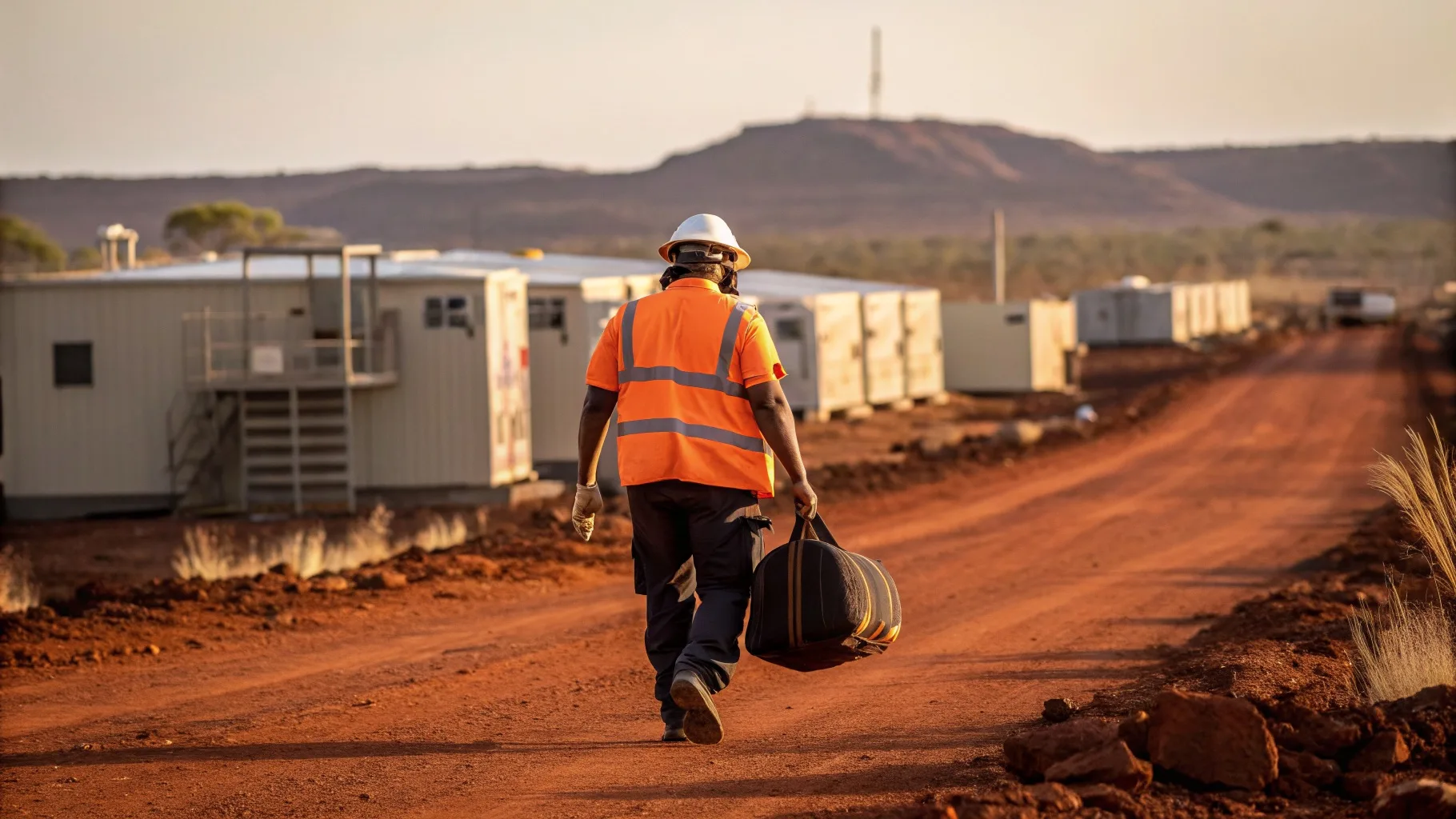
Your first FIFO swing can feel overwhelming. You're in a new environment, with new people, following routines you've never experienced. That's normal.
Here's everything you need to know to walk in confident and prepared.
Before You Fly: What to Pack
Your employer will send a packing list. Follow it carefully — but here's what most people wish they'd known:
- All required PPE — Steel-capped boots, safety glasses, etc. (check what's provided vs. what you need)
- Work clothes — Company may provide hi-vis, but bring comfortable base layers
- Comfortable shoes — For the mess and camp (not just work boots)
- Toiletries — Camps provide basics, but bring your preferred brands
- Phone charger — And a longer cable than you think you need
- Entertainment — Books, tablet, headphones for downtime
- Bring earplugs — camp rooms can be noisy
- Bring a sleep mask — for day sleeping on night shift
- Photos of family — small comforts matter
- Snacks you like — mess food is good but sometimes you want your favourites
The Flight and Arrival
At the Airport
FIFO flights are different from regular travel:
- Check-in at a dedicated FIFO terminal or area
- You'll need photo ID and possibly a site access card
- Bag weight limits are strictly enforced — usually 15-20kg
- Flights are often early morning (5-6am departure)
Arriving on Site
When you land:
- Buses will take you from the airstrip to camp
- You'll go through site induction (could take half a day or more)
- You'll be assigned your room and shown around camp
- First-day nerves are normal — everyone's been there
Camp Life
Your Room
Most modern camps have single rooms with:
- Single bed, wardrobe, desk, TV
- En-suite bathroom (shower, toilet)
- Air conditioning
- WiFi (quality varies by site)
Rooms are cleaned regularly. You're responsible for basic tidiness.
The Mess (Dining Hall)
All meals are provided and included. Most camps have:
- Breakfast, lunch, and dinner at set times
- Packed lunch options ("crib") for taking to work
- Multiple options including hot meals, salad bar, sandwiches
- 24-hour access to snacks and drinks
Quality varies by site, but most people are pleasantly surprised. It's not five-star, but it's hearty and there's plenty of it.
Facilities
Most camps offer:
- Gym — usually well-equipped
- Rec room — pool tables, TV, games
- Outdoor areas — some have pools, basketball courts
- Laundry — free washing machines and dryers
- Shop/"wet mess" — for snacks, toiletries (some sites have limited alcohol)
The Work Routine
Typical Shift Structure
Most operations run 12-hour shifts:
- Day shift: Usually 6am - 6pm
- Night shift: Usually 6pm - 6am
A Typical Day
- 5:00am — Wake up, shower
- 5:30am — Breakfast in mess
- 5:50am — Bus to work area
- 6:00am — Pre-start meeting/toolbox talk
- 6:30am — Start work
- 12:00pm — Lunch break (usually 30 mins)
- 6:00pm — End shift, bus back to camp
- 6:30pm — Dinner, shower, relax
- 9:00pm — Most people are in bed
Pre-Start Meetings
Every shift begins with a pre-start or "toolbox" meeting:
- Safety updates and hazard alerts
- Work allocation for the day
- Weather and environmental conditions
- Questions and concerns
Pay attention, ask questions if unsure, and don't be late.
First Swing Survival Tips
Do:
- Listen more than you talk — Learn before you offer opinions
- Ask questions — It shows you take safety seriously
- Be early to everything — The bus won't wait
- Introduce yourself — Learn names, be friendly
- Look after your body — Sleep, eat well, hydrate
- Call home — Stay connected with family
Don't:
- Complain about the food, rooms, or roster — It marks you as difficult
- Pretend to know things you don't — Ask, don't guess
- Skip breaks or meals — You need fuel for 12-hour days
- Isolate yourself — Camp can feel lonely if you don't engage
- Skimp on sleep — Fatigue is a safety issue
Adjusting to Night Shift
If your roster includes night shift:
- Sleep environment: Use earplugs and a sleep mask. Make your room as dark as possible.
- Eat appropriately: Have a proper meal before shift. Light snacks during. Avoid heavy food before sleeping.
- The flip: Transitioning from nights to days (or vice versa) takes a few days. Don't plan big activities for changeover days.
Your First Swing Will Be Hard
Let's be honest: your first swing will probably be tough. You'll be tired. You'll miss home. You'll make mistakes.
That's completely normal. Everyone goes through it.
By your third or fourth swing, it becomes routine. By your tenth, you'll forget what a big deal it once seemed.
The workers who succeed are the ones who show up, stay positive, and keep learning. You've got this.
How much are you losing by not being in mining?
Our free 60-second FIFO Roster Calculator shows your exact weekly income gap. Real Australian salary data. No signup.
Run the calculator →