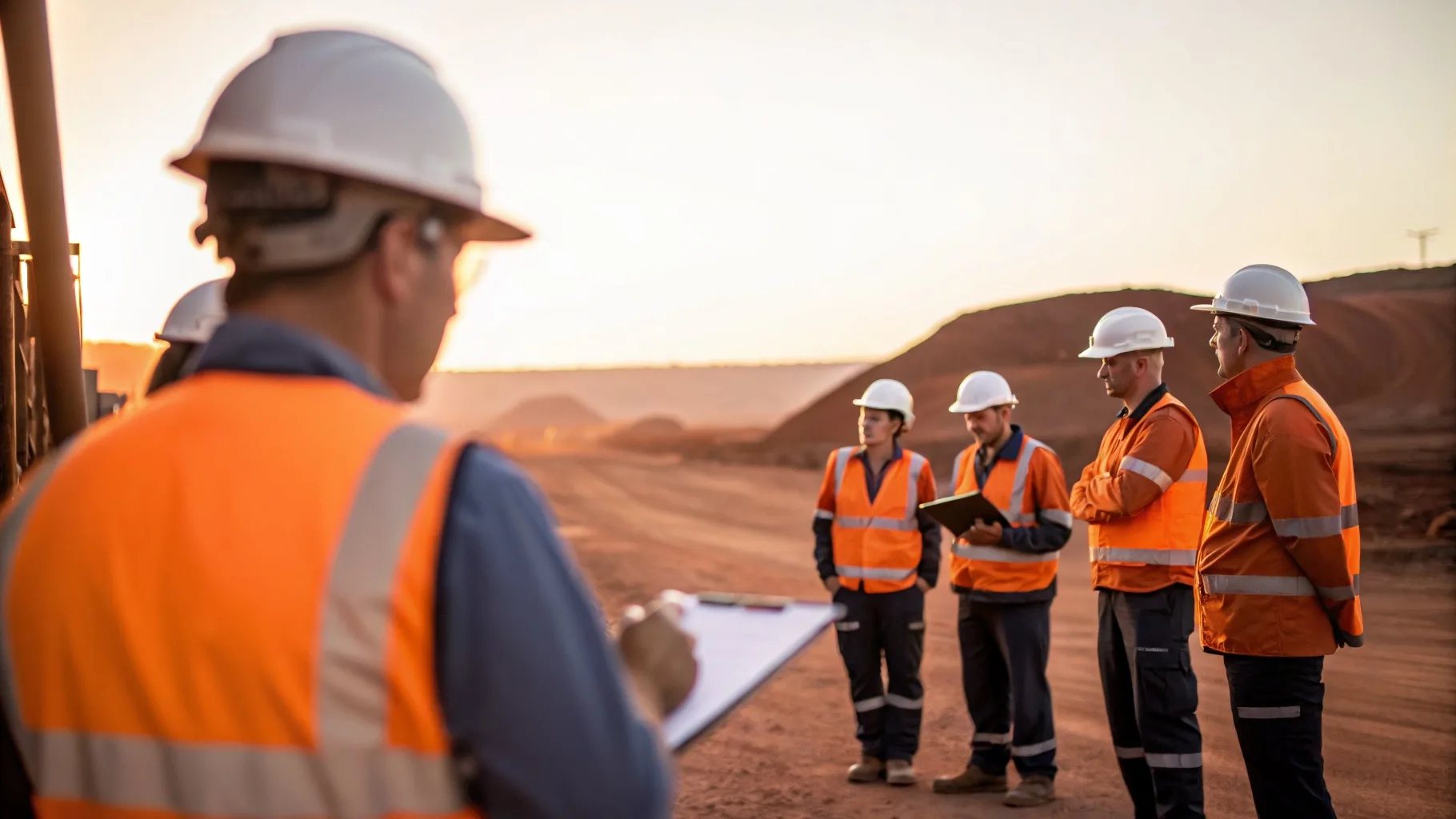
Safety questions typically make up 50% or more of a mining interview. Get them wrong and you're out — regardless of how qualified you are technically.
Here's how to answer safety questions in a way that sounds genuine, not rehearsed.
Why Safety Questions Matter So Much
Mining companies face massive liability if something goes wrong. A single serious incident can cost millions in compensation, fines, and lost production — not to mention the human cost.
When interviewers ask safety questions, they're assessing:
- Awareness — Do you understand hazards?
- Attitude — Do you genuinely care, or just say the right things?
- Action — Will you actually speak up and intervene?
- Culture fit — Will you reinforce or undermine the safety culture?
The #1 Mistake: Sounding Rehearsed
Interviewers have heard every textbook answer. What they're looking for is authenticity — real examples from your experience that show safety is part of who you are, not just something you memorised.
"Safety is my number one priority. I always follow procedures and wear my PPE."
This tells them nothing. Everyone says this.
"Last month I noticed water pooling near an electrical cabinet after rain. It wasn't on anyone's checklist, but it didn't feel right. I reported it and they installed drainage. Small thing, but that's how incidents get prevented."
The Framework: Specific + Personal + Outcome
Every safety answer should include:
- A specific situation — Time, place, what you observed
- Your personal involvement — What YOU did (not the team)
- The outcome — What happened as a result
Key Safety Concepts to Know
Make sure you can explain these naturally in conversation:
SLAM (Stop, Look, Assess, Manage)
A personal risk assessment done before starting any task. Explain how you use it in your daily routine.
Take 5 / Safety Take 5
Similar to SLAM — a quick hazard check. Know the difference if the company uses a specific system.
JSA (Job Safety Analysis)
A documented breakdown of task steps and associated hazards. Used for higher-risk or non-routine work.
Zero Harm
The philosophy that all injuries are preventable. Not just a target — a mindset.
Hierarchy of Controls
Elimination > Substitution > Engineering controls > Administrative controls > PPE. Know that PPE is the last resort, not the first.
Common Questions and How to Approach Them
"What would you do if you saw an unsafe act?"
What they want to hear: That you'll intervene, not ignore. That you'll address it respectfully. That you'll report it appropriately.
Key points:
- Stop the unsafe act if there's immediate danger
- Have a conversation with the person — not accusatory
- Report through proper channels afterward
- Focus on the behaviour, not the person
"Tell me about a time you stopped a job for safety."
What they want to hear: That you have the courage to stop work. That you can articulate why. That you understand it's not just a right — it's an expectation.
If you don't have a mining example: Use an example from construction, transport, or any other workplace. The principle is the same.
"What does 'everyone goes home safe' mean to you?"
What they want to hear: That you understand safety is personal — it's about going home to your family. That you look out for others, not just yourself.
Make it personal: Mention your family. Why going home matters to YOU.
Red Flags Interviewers Watch For
- Blaming others — "The supervisor made me do it"
- Minimising incidents — "It was just a small thing"
- No examples — Only speaking in generalities
- Production over safety — Any hint that you'd cut corners to meet targets
- Passive language — "Mistakes were made" instead of "I made a mistake"
Prepare Your Stories
Before any mining interview, prepare 3-4 specific safety stories from your experience:
- A time you identified a hazard
- A time you stopped or refused work
- A time you helped a colleague work safer
- A near-miss or incident you learned from
Practise telling them out loud until they sound natural, not memorised.
How much are you losing by not being in mining?
Our free 60-second FIFO Roster Calculator shows your exact weekly income gap. Real Australian salary data. No signup.
Run the calculator →